

Most of us grow up with a remarkably clear idea of where we end.
Somewhere around the skin.
Inside is me.
Outside is everything else.
It seems so obvious that we rarely think to question it.
But Alan Watts thought this apparent separation concealed something extraordinary.
In The Book: On the Taboo Against Knowing Who You Are, he explored an idea that appears in many forms throughout his work: perhaps we are not isolated beings who have somehow been dropped into the universe.
Perhaps we are something the universe is doing.
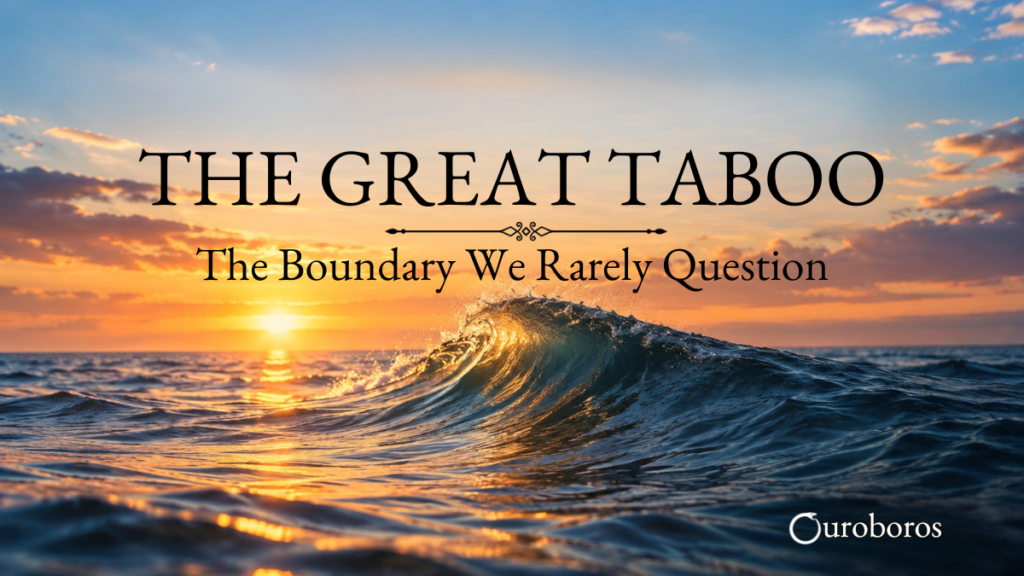
Consider a wave.
We can point to one, give it a name and watch it travel across the surface of the ocean.
For a while, it appears to be a separate thing.
But where exactly does the wave end and the ocean begin?
Remove the ocean and there is no wave.
Perhaps the same question can be asked about us.
We breathe air created partly by organisms around us. The food we eat becomes our bodies. Our thoughts are shaped by languages we did not invent, cultures we did not create and experiences involving countless other people.
And yet we experience ourselves as independent islands moving through an external world.
Watts called his book a discussion of a taboo because the alternative can sound almost forbidden: that the deepest thing we call “I” might not be quite as separate from everything else as we have been taught to assume.
Gnostic traditions approached the question differently, but they too questioned whether our ordinary identity tells the whole story of what we are.
Perhaps neither tradition requires us to accept an answer.
The interesting part may simply be noticing how rarely we question the boundary.
We spend our lives asking who we are.
But perhaps there is another question.
Where, exactly, do we end?