

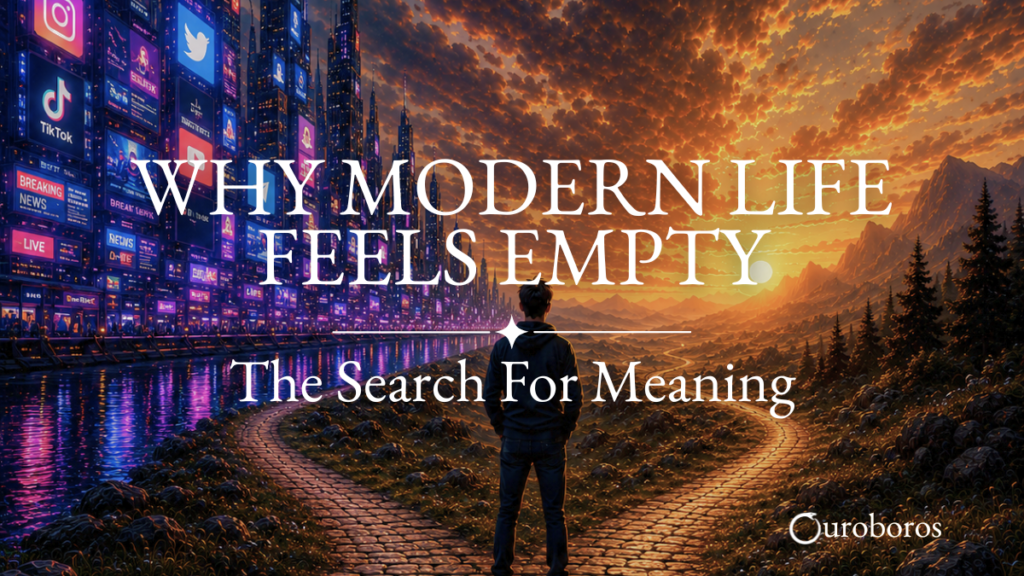

Many people today enjoy comforts that previous generations could scarcely imagine. We have instant access to information, endless entertainment, and technologies that connect us to almost anyone in the world. Yet despite these advances, a quiet dissatisfaction often lingers beneath the surface of daily life.
For some, it appears as a sense of restlessness. For others, it takes the form of anxiety, loneliness, or the feeling that something important is missing. We pursue success, possessions, and experiences, hoping they will bring fulfillment, only to discover that the satisfaction they provide is often temporary.
Why is this?
One possibility is that modern life has become filled with distractions. Our attention is constantly pulled in different directions by notifications, advertisements, news, social media, and an endless stream of content competing for our focus. In a world where silence has become rare, it is easy to lose touch with ourselves.
The problem is not technology itself. Technology can educate, inspire, and connect us. The challenge arises when external stimulation becomes so constant that we never pause long enough to listen to our own thoughts.
Many people spend years moving from one goal to the next. They tell themselves that happiness will arrive when they earn more money, acquire a larger home, receive greater recognition, or finally achieve some long-desired ambition. Yet each accomplishment often reveals another destination waiting beyond it.
The horizon keeps moving.
Ancient wisdom traditions observed this pattern long before the modern age. They recognized that human beings possess a longing that cannot be permanently satisfied by material achievements alone. While comfort and success have their place, they do not answer the deeper questions that arise within us.
Who am I?
Why am I here?
What is truly worth pursuing?
These questions emerge in moments of stillness. They often appear when the noise subsides and the familiar distractions lose some of their power.
Throughout history, some seekers concluded that what people truly desire is not more information but deeper understanding. Not more possessions but greater meaning. Not more stimulation but a more direct experience of reality.
The ancient Gnostics used the word gnosis to describe this kind of inner knowing. It was not merely intellectual knowledge. It was an awakening to something deeper than beliefs, opinions, or second-hand information.
Whether one agrees with the Gnostics or not, their insight remains relevant. The feeling of emptiness that many experience may not be a sign that something is wrong with them. It may be a sign that they are searching for something that modern life rarely encourages them to seek.
Perhaps the answer is not to consume more, achieve more, or distract ourselves more effectively.
Perhaps the answer begins by becoming still enough to hear what has been calling to us all along.

Continue your journey with The Hidden Knowledge, a complimentary introduction to gnosis, symbolism, and the search for meaning